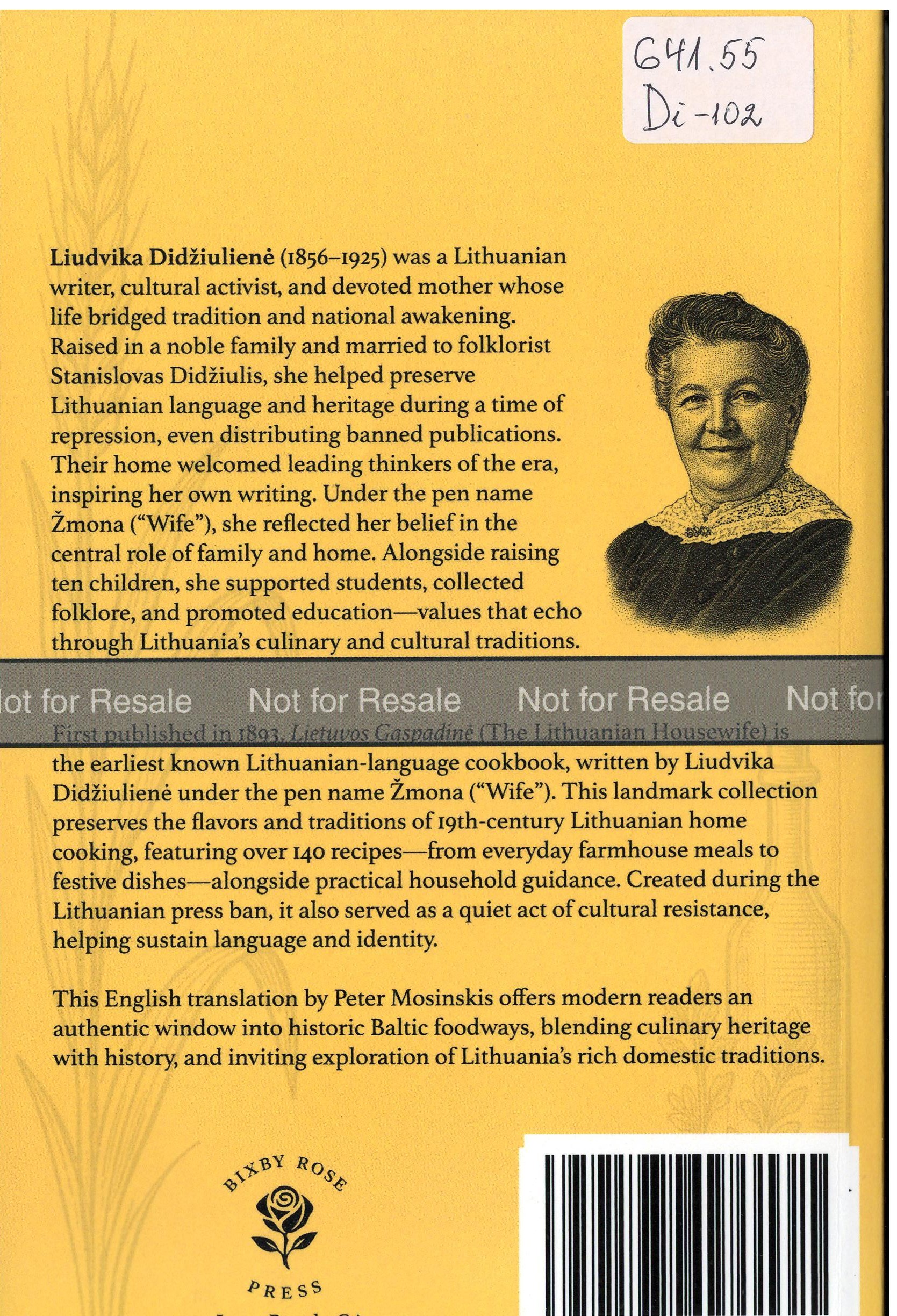
In April 2026, the first English translation of Liudvika Didžiulienė-Žmona's 1893 cookbook "Lietuvos gaspadinė, or Instructions on How to Properly Make Use of God's Gifts" was published. The book is published under the title The Lithuanian Housewife (Lietuvos Gaspadinė): Or, Instructions on How to Properly Make Use of God's Gifts. Translator – Peteris Mosinskis, publisher – Bixby Rose Press.
The translation of the book is a significant event in the history of Lithuanian culinary heritage. This edition is the first English translation of „Lithuanian Gaspadinė“ available to a wide audience. The original book, published in 1893 during the period of the Lithuanian press ban, is considered the first known cookbook in the Lithuanian language. It is not only a collection of recipes, but also a valuable source of information on the history of Lithuanian domestic life, food culture, language and everyday life in the late 19th century.
Translation – and the continuation of family history
In the book’s foreword, translator Peter Mosinskis says that this translation was not only a professional but also a very personal project for him. Liudvika Didžiulienė-Žmona is his paternal great-grandmother, so working with her text became a sign of respect for the family history and the author’s legacy. In 2017, while visiting Anykščiai, the translator held in his hands an early edition of „Lietuvos gaspadinė“, kept in the Anykščiai Liudvika and Stanislovas Didžiuliai Public Library, and also visited the author’s house-museum in Griežionėlėsi (Anykščiai district). It was then that he had the idea to make this historical publication accessible to English-speaking readers.
Peter Mosinskis writes about the beginning of this idea: „When I arrived in Lithuania in 2017 (it was not my first trip) and discovered this historical connection between food, writing and my family history, a seed was planted in my heart. A visit to the Anykščiai Library, which also houses my grandmother Halina Didžiulis-Mošinskis“ book collection, finally reinforced the idea that I had to do something meaningful with this book. I believe that nothing in life happens without a reason. It seemed that my entire path led to this point, and the threads of culture, food, family, history and writing intertwined into one. I saw beauty in this journey of discovery and the opportunity to better understand what lies here.”.
The biggest challenge is to preserve the spirit of the 19th century
According to the translator, the biggest challenge was not only to accurately convey the text in English, but also to maintain the authentic language and style of the 19th century recipes. The recipes of that time are quite different from modern ones – they are presented with long descriptions, they use units of measurement that are no longer used today, and the dishes are prepared without the kitchen appliances that are now common. The translator deliberately decided not to change these features, as they are an integral part of the historical document. Although modern technologies, including artificial intelligence, were used in the translation process, the most important principle remained respect for the original text and its historical context.
The book is not just about recipes
In the preface, Peter Mosinskis emphasizes that „Lietuvos gaspadinė“ is much more than a cookbook. It reveals the everyday life, family traditions, everyday life and cultural memory of 19th century Lithuania. The translator also points out that when reading the text, one inevitably encounters the attitudes of the society of that time. Some parts of the text may seem problematic today, especially when it comes to the Jewish community. However, they testify to the historical context and at the same time remind us of the significant influence that the culinary traditions of different nations had on Lithuanian cuisine.
A translator about himself and writing
In the foreword, Peter Mosinskis also talks about his path to writing: „I started writing myself in the fourth grade – I kept a diary by hand, albeit irregularly. In high school, writing took on a new meaning and became a permanent habit. Later, the so-called „Web 2.0“ and blogs appeared, so I started writing a personal blog-diary. A few years later, having an old BlackBerry phone, I turned it into my main writing tool – I used it to record my travels, adventures and life’s ups and downs. I love writing by hand (and I still think it’s a very valuable process), but writing on a computer or mobile device has so many advantages – it’s easy to take with you, everything is accessible and convenient to use.„
Cooking is a way to connect
The translator concludes his foreword with the idea that writing and cooking have much in common – both are ways of creating, learning and sharing experiences. „Writing is a creative process, and cooking is no different. We learn to cook well by studying, practicing and trial and error. We learn by following, imitating and adapting the work of those people who are willing to share their knowledge. I hope that this book will become a starting point for understanding what cooking (especially Lithuanian cooking) looked like 132 years ago. I also hope that it will encourage us to think about how different our world is today and how much has remained the same: we still cook. We still eat together, using most of the same ingredients. <…> We can learn so much from each other, and what better way to connect than through what brings us so much joy and satisfaction?“, notes Peter Mosinskis.
The author hopes that the English edition will help rediscover "Lietuvos gaspadinė" not only as the oldest Lithuanian cookbook, but also as an important testament to Lithuanian culture and culinary heritage.
The spirit of the original has been preserved
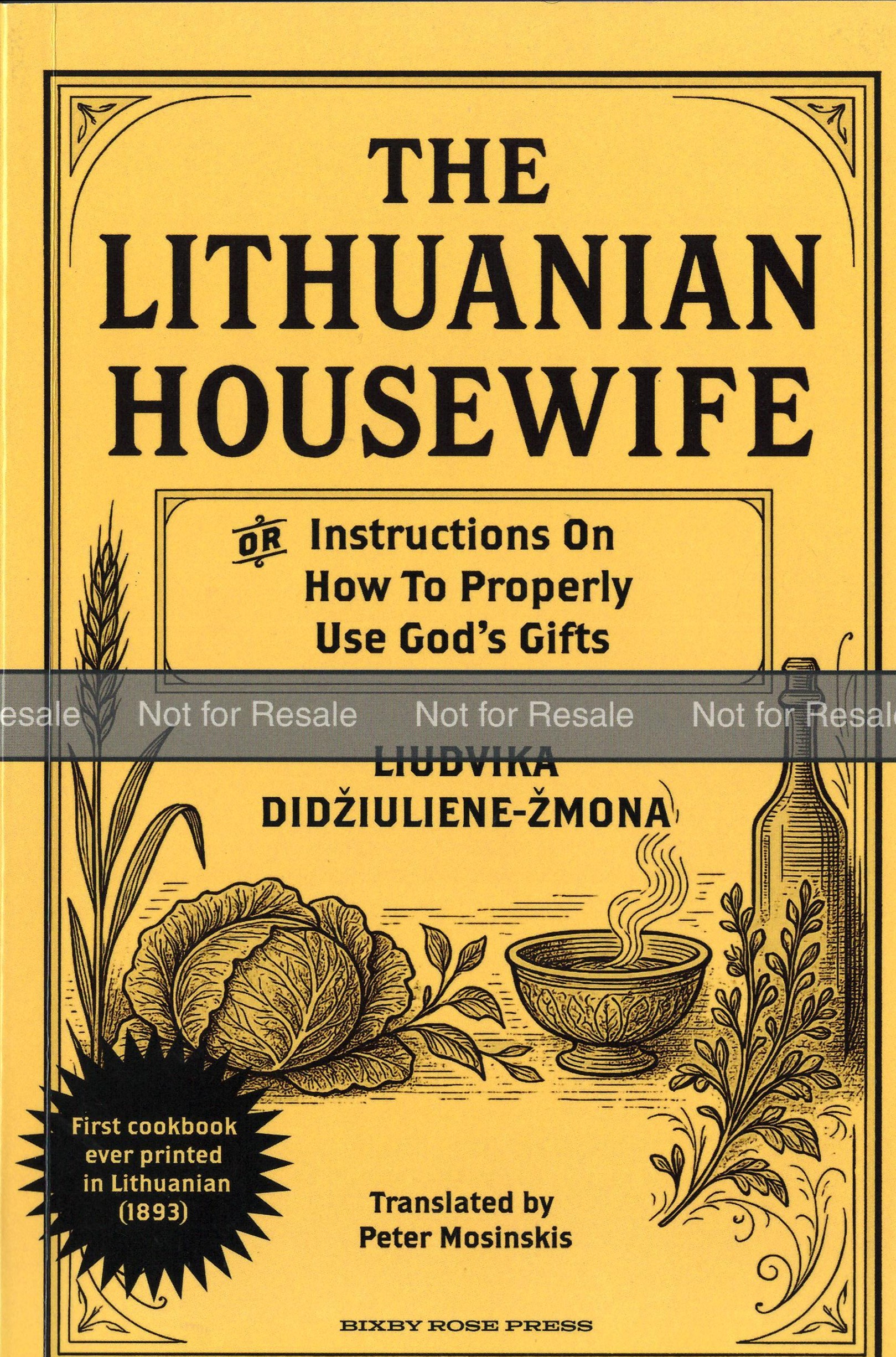
In the English edition, Peter Mosinskis presents the chapter and recipe titles in the original (Lithuanian) language – in parentheses or italics. The translator’s notes and explanations are presented in square brackets. The book cover is designed in a classic style, reminiscent of 19th century publications. On a yellowish background, the illustrations – a cabbage, an ear of grain, a steaming bowl and a bottle – symbolize traditional Lithuanian cuisine and agricultural products. The cover emphasizes the historical significance of the publication – it is the translation of the first Lithuanian-language cookery book into English. The publication is published in a limited edition and is not distributed commercially.
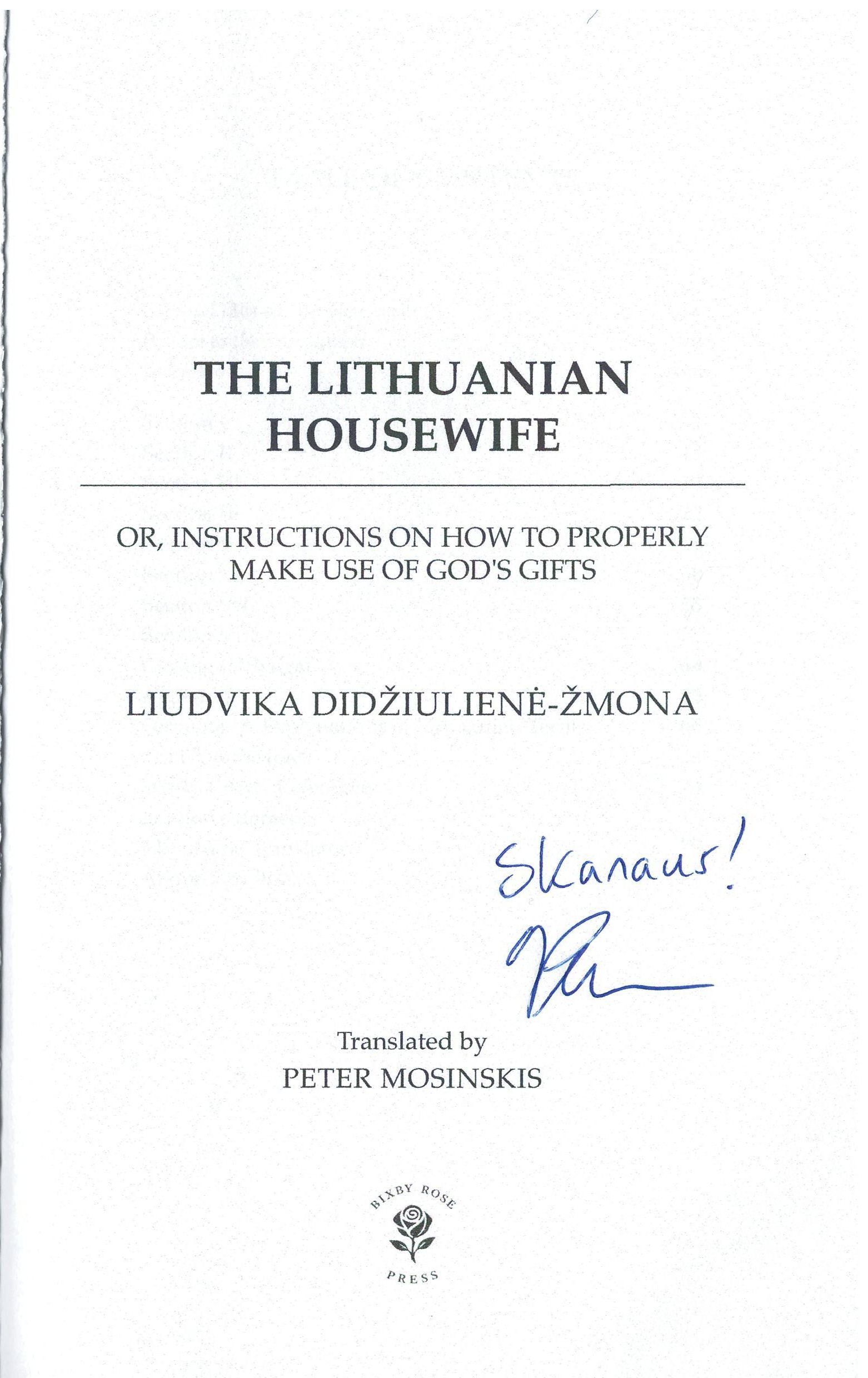
L. Didžiulienė-Žmona's recipe book in English with the autograph of the translator Peter Mosinskis can be found in the Regional Documents and Local History Department of the Anykščiai L. and S. Didžiuliai Public Library.
Audrone BEREZAUSKIENĖ
Head of the Regional Documents and Local History Department of the Latvian Academy of Sciences