KK route: legendary Anykščiai watering holes
Anykščiai L. and S. Didžiuliai Public Library
The Karazija winery can be called the first "unicorn" of Anykščiai, and the restaurant "Puntukas" - the city's chief matchmaker. And the Anykščiai tourist base was founded in... a chicken coop. The route of the legendary drinking places of Anykščiai will reveal a lot of new and unheard-of facts about famous production and trading places: a winery, taverns, cafes, bars, a beer bulk warehouse.
When creating this route, we aimed to update the cultural heritage preserved in the library and expand your knowledge of the city's history - to look at it from the perspective of the culture of beverage production and consumption in Anykščiai. This route is full of not only facts, but also real-life stories. With a sonorous, somewhat pretentious name and accompanying stories, we aim to draw attention not only to the heritage, but also to remind you of the social consequences of consuming alcoholic beverages.
1. Bali's first Karasija wine cellar
Vilnius St. 5
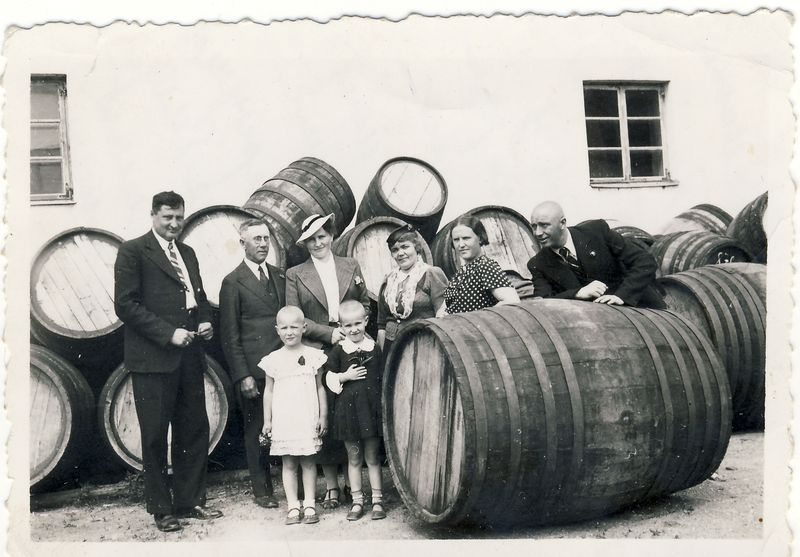
The history of the Anykščiai wine factory began in the basement of this house. The father of the future interwar businessman Balis Karazija (1897–1985), Jokūbas Karazija (1864–1936), settled in the Naujėjie Elmininkai farmstead after the First World War and planted a large garden. It is said that he once said to his son Balis: „Son, you are studying agronomy, and I have nowhere to put apples and fruit. Maybe we should try winemaking together?“ Balis asked his father for advice and in 1926, having rented premises in the basement of this house, the two fermented the first 8,000 liters of apple wine. The people of Anykščiai, having learned about the wine – even when it was not fully fermented, quickly bought it up, paying one litas per liter. Unexpected success encouraged Balis Karazia to take business seriously – he received permission from the Lithuanian Ministry of Agriculture to set up a fruit wine factory workshop in Anykščiai.
Ingenuity helped Karazija become one of the most famous and best winemakers in Lithuania. In order to sell his products more easily, he ordered his workers to dress in their best suits and go to Kaunas restaurants to demand Bali Karazija wine. When they came to Metropolis and Konrad's Café, the workers would ask to bring this particular wine. When the bartenders shrugged their shoulders - they had never heard of such a name - Karazija's workers would allegedly get angry, bang their fists on the table, and tear up the tablecloths.
Soon after these events, the wines of the Anykščiai winemaker were already being poured in the largest restaurants in Kaunas, and Anykščiai even began to be called the capital of Burgundy during the interwar period.
2. Feldmans Hotel-Restaurant "Komercija"„
A. Baranauskas street 13
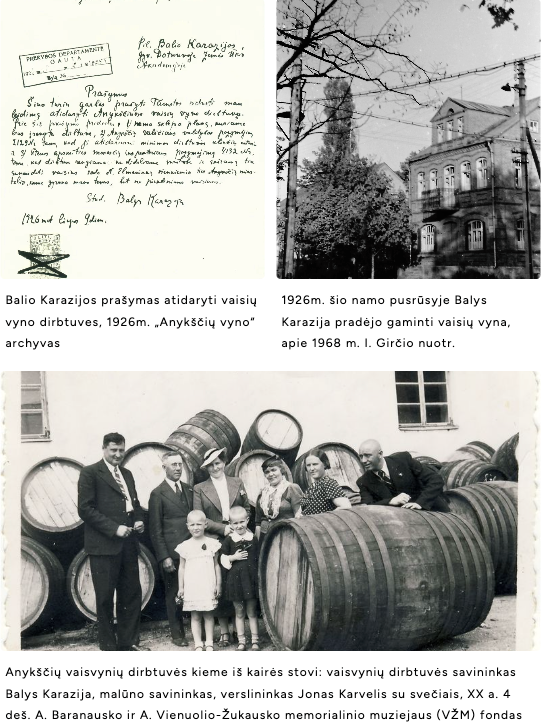
Hirsz Feldman is a Jewish resident of Anykščiai, the first and only one in Anykščiai to own a bus at the time. Once a week, he would take Anykščiai residents to Kaunas – including those who demanded Karazija wine in Kaunas restaurants. Just sitting on the bus, even when it was stationary, was such an event that children would agree to wash it in exchange for the opportunity to experience it.
The bus stopped at this place for a reason – here, in the house of Hirsz and Golda Feldmans, there was a hotel-restaurant „Komercija“. The blue house with a gable roof has survived to this day. In 2024, a work by sculptor Romualdas Inčirauskas was hung on its facade, dedicated to the memory of Hirsz and Golda Feldmans.
3. Beer bulk warehouse
A. Baranauskas a. 4
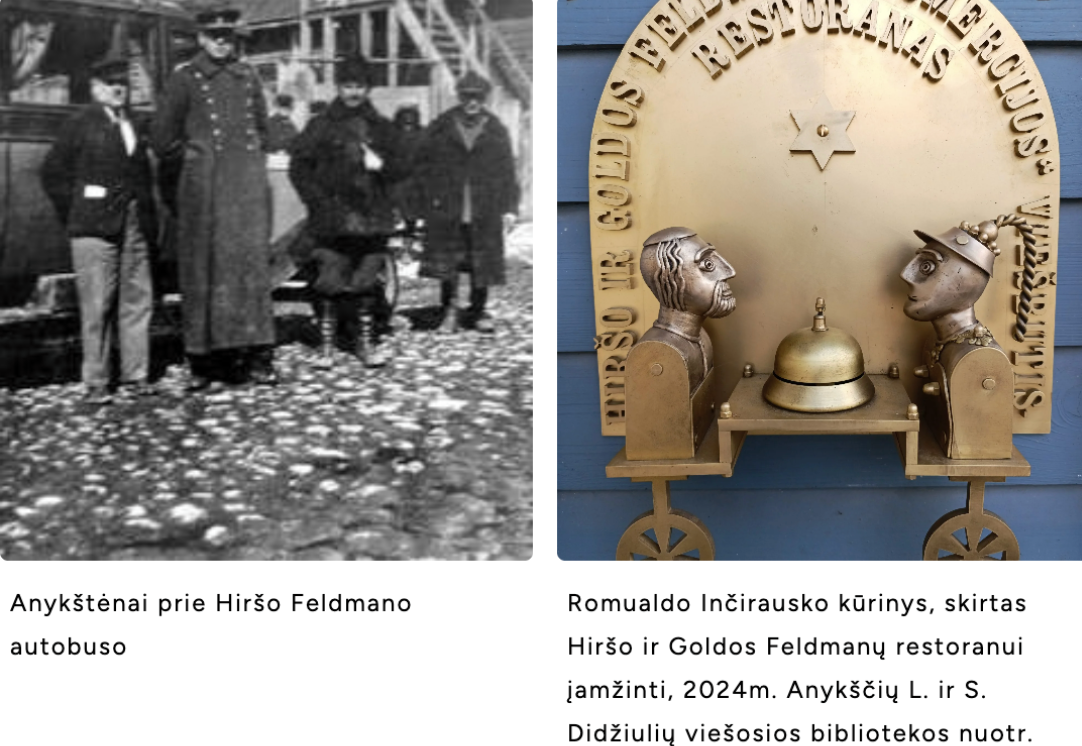
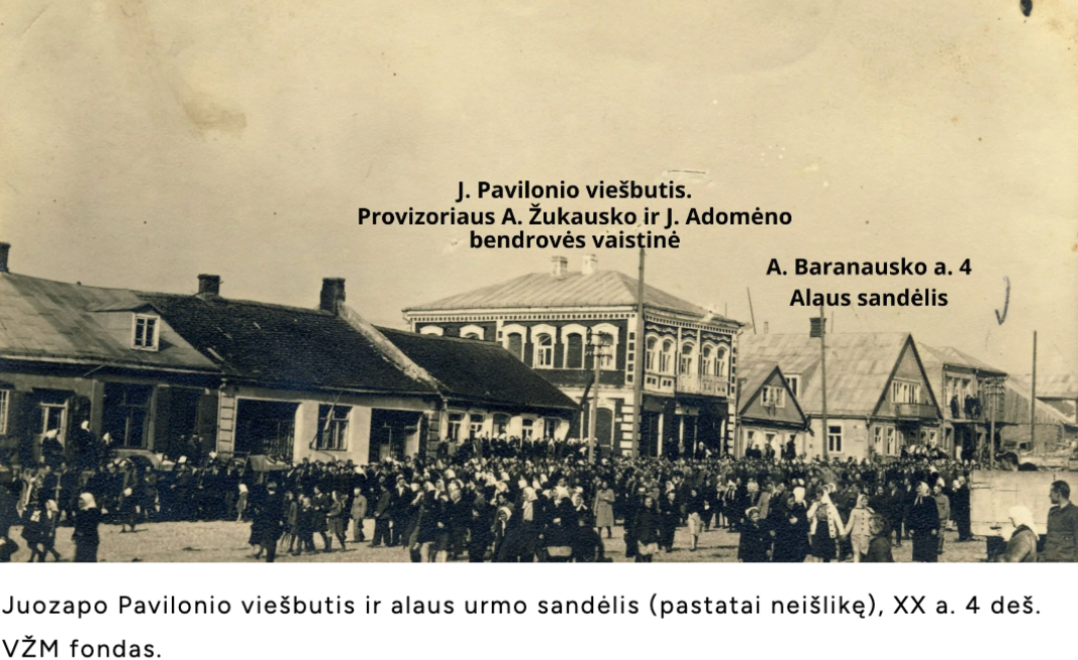
During the interwar period, a bulk beer warehouse stood here. Little information about it has survived: it is known that in 1930 its owner was a Jew named Benderis Icikas, and in 1939, the Anykščiai telephone book already listed another name next to the beer warehouse number – A. Pantanavičius. Neither Icikas nor Pantanavičius brewed beer – they brought it from Panevėžys, already bottled, and distributed it in Anykščiai. The building where the beer warehouse operated has not survived to this day – it stood near the house of Juozapas Pavilonis.
The aforementioned 1939 Anykščiai telephone book, or rather its metal installation, adorns the facade of the Angels Museum – Sacred Art Center.
4. Pavilonis Hotel and the first pharmacy of Antanas Vienuolis-Žukauskas
A. Baranauskas a. 2
In the interwar period, one of the most beautiful buildings in Anykščiai stood on the Cultural Center Square, which, unfortunately, has not survived to this day. Not only did Juozapas Pavilonis' (1875–1961) hotel "Centralnaja" (renamed "Lietuva" in independent Lithuania) operate here, but also the "Pharmacy of the Pharmacist A. Žukauskas and J. Adomėnas Company" was established on the second floor in 1918. In the autumn of 1922, Žukauskas divided the company's assets through a court, took over the private pharmacy from Adomėnas, and was its manager from 1922 to 1935. In 1928, he built a separate brick house for the pharmacy in the center of Anykščiai - his private pharmacy operated there from 1929 to 1940.
You might ask – what do a watering hole and… a pharmacy have in common? In 1935, a bottle of Hungarian wine cost 15 litas, and it could be purchased at the Antanas Vienuolis-Žukauskas pharmacy.
5. Balinese Carazion Fruit Cake Workshop
S. Darius and S. Girėno streets 8
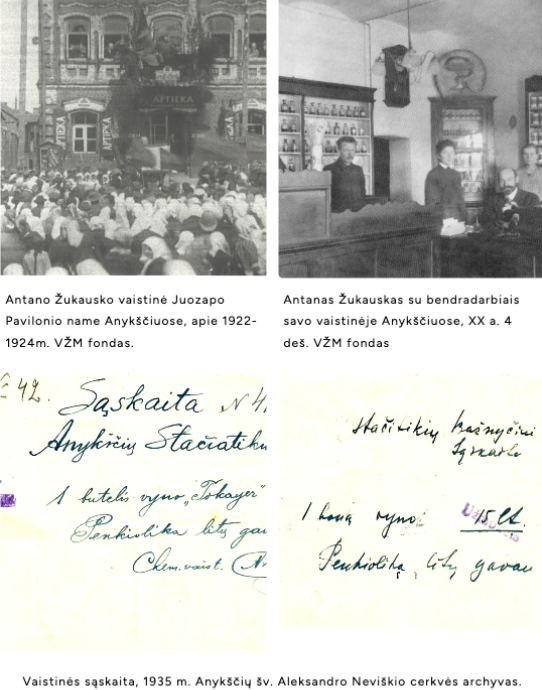
Balys Karazija constantly expanded his business – he bought fruits and berries from all over Lithuania. In 1930, using credit, in the southern part of Anykščiai, by the Šaltupis stream, he purchased a plot of land and built a brick factory with warehouses. Initially, 12–14 workers worked at Karazija's factory, and in 1939 there were already about 40, and during the season up to 75 people. In 1939, the factory produced about 900,000 liters of wine. Thanks to Karazija, fruit and berry wine became a traditional Lithuanian drink in Lithuania.
Every year, a winemaker in the Anykščiai grove would organize May celebrations for his workers and their families. At Easter, Christmas, and New Year, he would give each worker 2–3 bottles of wine, on name days – 3, and for weddings or christenings – even more.
Having withstood Soviet nationalization, Prohibition, and all the changes of the 20th century, the Anykščiai Winery still operates here today and this year celebrates its 100th anniversary.
6. Legendary pubs "Stačiamalkis" and "Aquarium"„
S. Darius and S. Girėno sts. 1-44 and J. Jablonskio st. 7
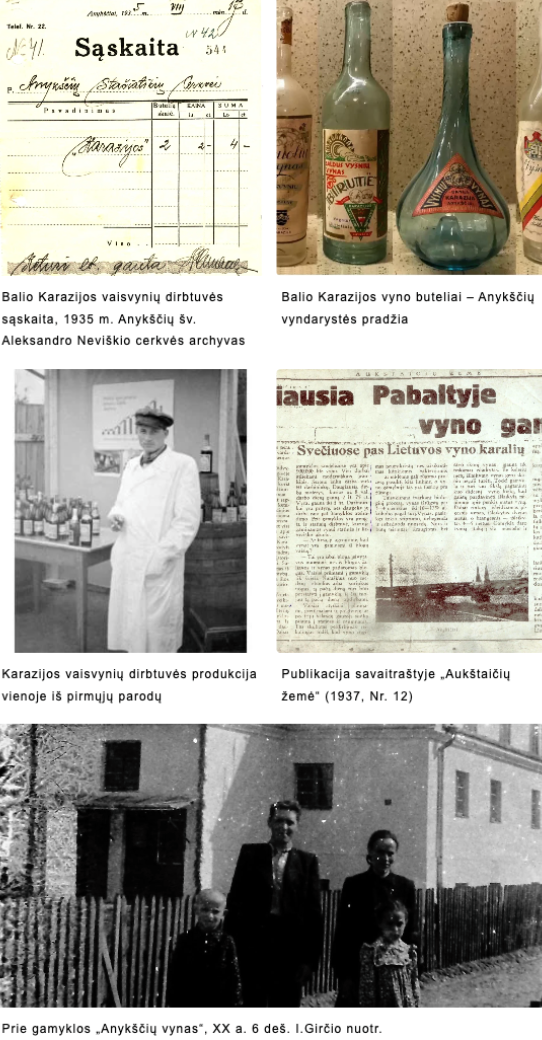
The legendary Soviet-era Anykščiai pubs "Stačiamalkis" (currently the "Camelia" pharmacy in the city center) and "Aquarium" (near the former bathhouse on J. Jablonskio St.) are intertwined with memories and stories. It is said that Zosytė worked at "Stačiamalkis", wearing a ring with a ruby on each finger. "Good beer today, not much water," visitors would rejoice, and women whose husbands visited there would curse Zosytė in every way.
„"Standing Beer" was called that because there was very little space inside - you had to drink beer while standing. "Aquarium" got its name because of its large windows.
7. Pub "Nikstys"„
A. Baranauskas a. 10
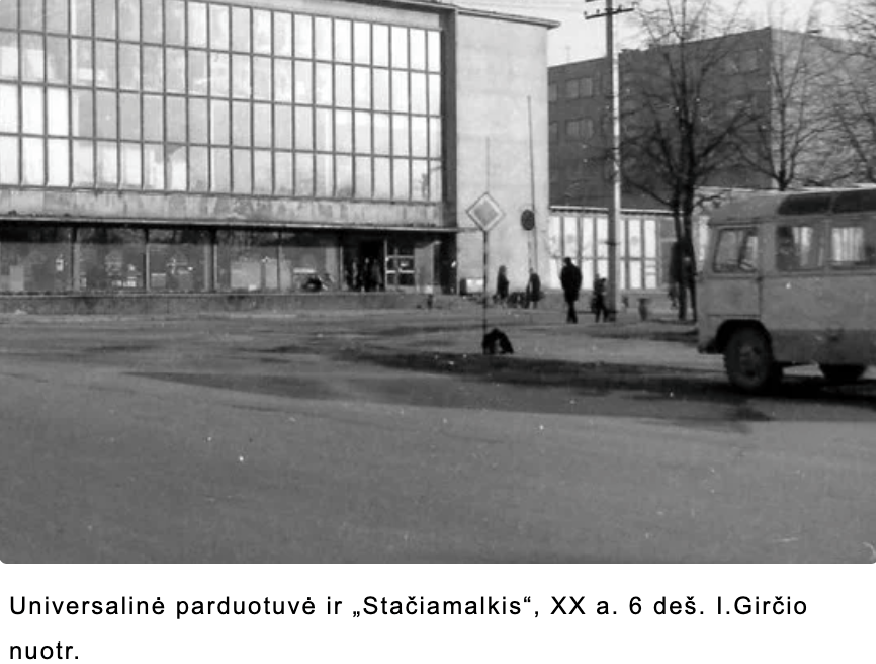
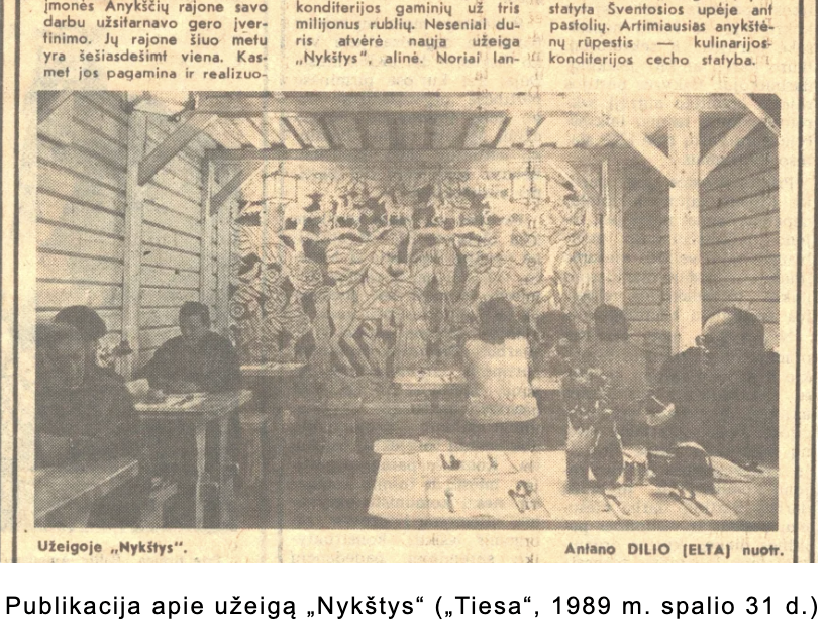
In the basement of the current courthouse, the pub-beer house "Nykštys" opened its doors in 1989. Its interior was decorated with an impressive decorative panel by the legendary folk artist of Anykščiai region Jonas Tvardauskas (1938–2010) – one of the walls was decorated with impressive wood carvings.
Some residents of Anykščina say that they can still taste the cianachs they ate there.
8. Restaurant "Puntukas"„
A. Baranauskas a. 16
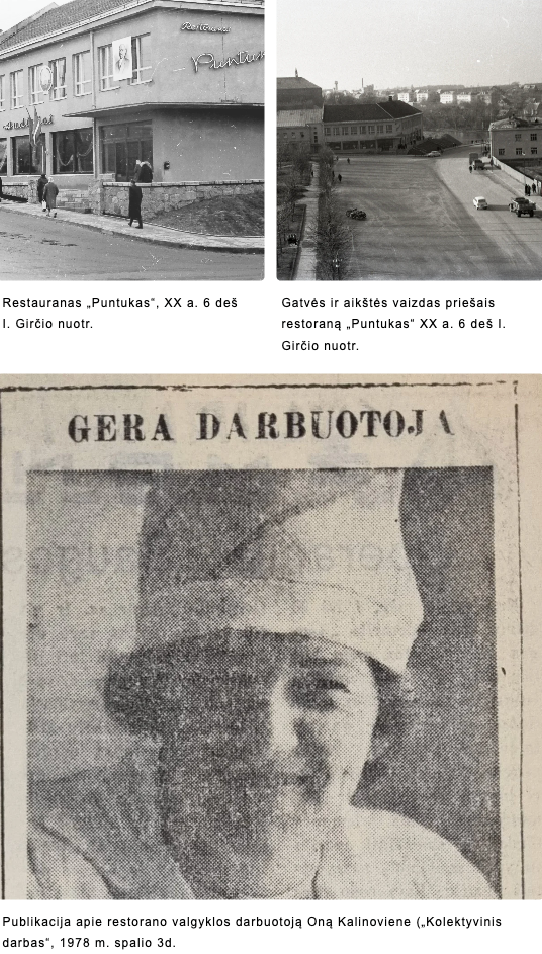
In the middle of the 20th century, the restaurant "Puntukas" was one of the most famous catering establishments in Anykščiai, famous for its unique interior, live music and variety of dishes. The restaurant, which opened around 1960–1962, quickly became a center of attraction for the people of Anykščiai. The restaurant also had a canteen at the hotel "Puntukas". The regional press of the time wrote that it served delicious, nutritious dishes and offered an extensive menu. The canteen was visited by 800–1000 people every day.
Many residents of Anykščiai remember that three times a week there was live music in the restaurant, and in the evenings young people would gather here – not only to eat or drink, but also to dance. According to the writer Rimantas Vanagas, the musician, bandmaster, leader of the Anykščiai brass bands, and a participant in all regional and republican song festivals, Stepas Žvibas (1914–1995), played at „Puntuka“. Anykščiai residents say that around 1977–1979, when Tautvydas Raščius worked as the restaurant administrator, certain dress code requirements were applied here: in the evenings, girls were allowed into the restaurant only if they were wearing dresses, and those wearing jeans were not allowed. On live music evenings, the restaurant was very popular – you had to book a table in advance, because if you came on the same day, you would hardly find a free place. Around 1977–1987 "Puntukas" was one of the most important places for young people to meet.
Today, the restaurant's space is empty - waiting for new tenants.
9. Café over the river
Paupios St. 1
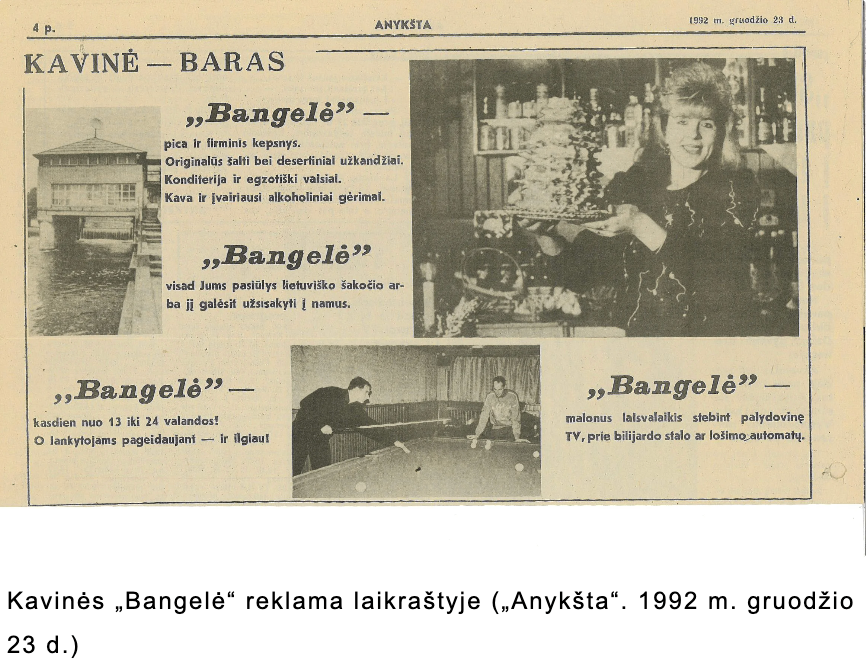
In 1988, a youth café was completed above the Šventoji Vago. It was hoped that enthusiastic young people would organize meaningful leisure activities here and that young people – both older and younger – would no longer have to wander around the streets and wonder what to do.
After the construction of the cafe was completed, it was not yet clear what would take place there – maybe evenings of meetings, club meetings, maybe it would become a cozy meeting place. Even the name was not clear for a long time – „Šventuolė“, „Vaidilutė“, „Paskenduolė“, „Prie fontanų“ were considered. Finally, „Bangelė“ was chosen.
„"Bangelė" hosted youth gatherings and parties, and was popular with both locals and guests. Later, it had various historical stages, and today, "Naha" operates in these premises.
10. Holiday home "Šilelis"„
Vilnius St. 80
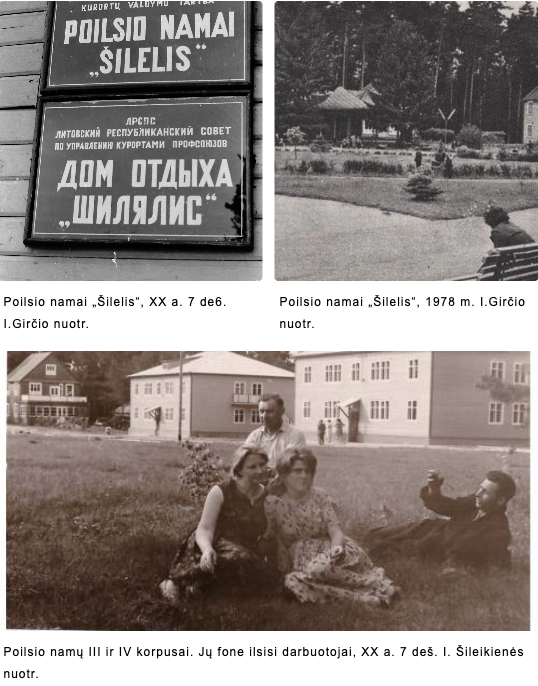
On December 19, 1960, in the Anykščiai grove, which was sung by Antanas Baranauskas, by the decision of the Republican Council of Trade Unions, the Anykščiai Tourist Base was established. A couple of years later, it grew and became the Šilelis Rest House. The first rooms with 50 beds and a dining room were equipped in three wooden houses.
In 1963, expansion increased the number of places to 140, and later to 410. Šilelis became a mass recreation center.
After Lithuania regained its independence, the Santara-Šviesa conventions were held here. In 2014, Vilnius SPA Anykščiai was opened on the territory.