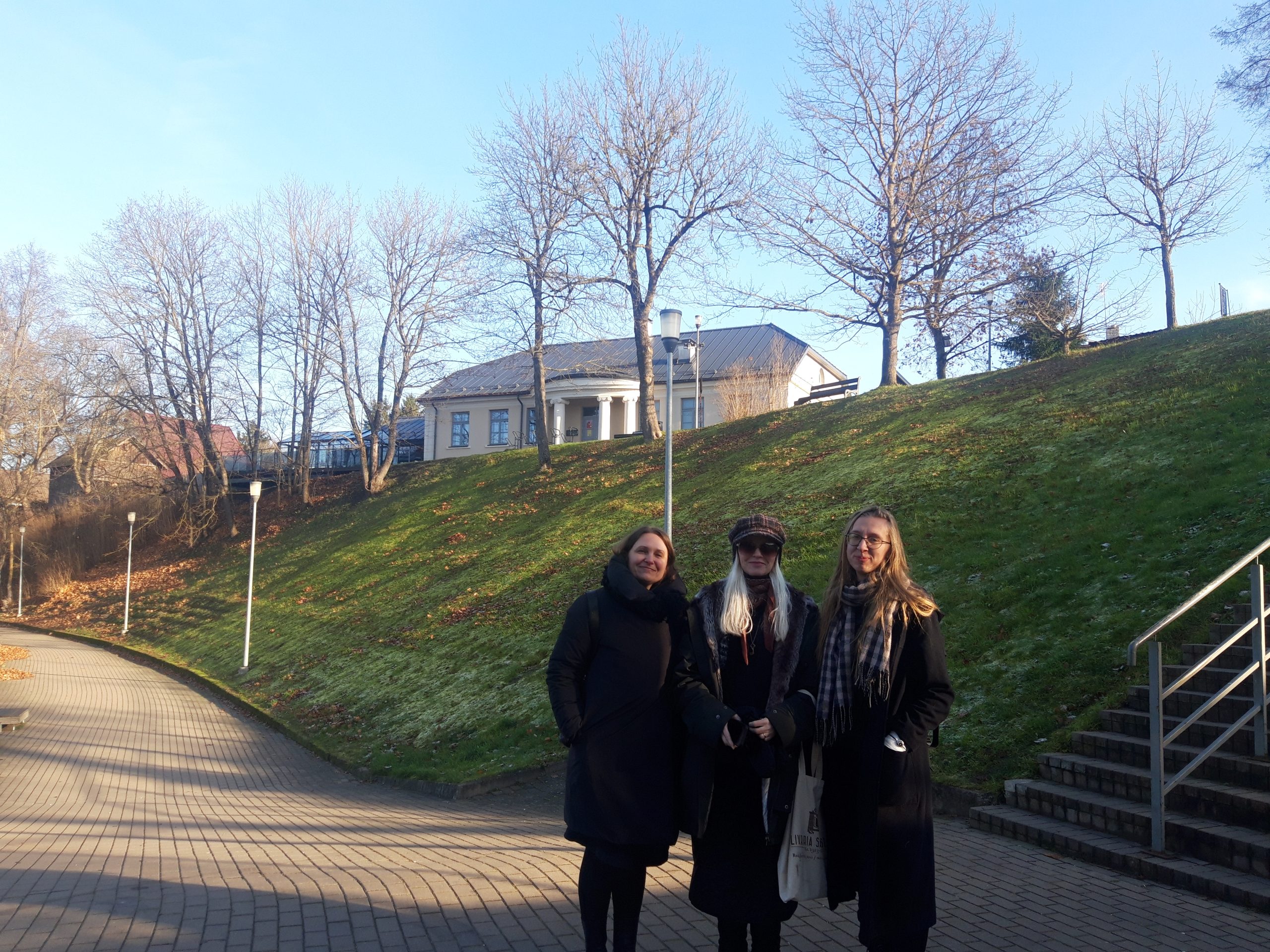
Since November 14, the Andrioniškis Residence has been home to a book author from Iceland, Reykjavik – Kristín Ragna Gunnarsdóttir. The writer is researching the literary traditions of the Anykščiai region, is interested in the writers of our region, their creative legacy, and is looking for a topic on which she could create a wordless book.
Writer Kristin says that she is particularly fascinated by tall trees in Lithuania, and the views surrounding the Andrioniškis Library – the church, the river and the forest – inspire her creativity. With library representatives Kristín visited the History Manor, the spaces of the Anykščiai Public Library, the Svėdasai (Juozas Tumas-Vaižgantas) Museum, and was introduced to the culinary heritage of Liudvika Didžiulienė-Žmona, as well as Lithuanian legends.
The Andrioniškis Library was not chosen for the residency by chance. The library is not only a space for books and information, but also a place where different experiences meet, ideas are born and community ties are strengthened. The resident is supervised by librarian Lina Vaišnytė, who in 2025 won the title of the best librarian in the Panevėžys region and the „Ad astra“ award in the category of municipal public library branches. The study room dedicated to the residency houses the library, manuscripts and personal belongings of the writer, poet, prose writer, journalist and publisher Antanas Drilinga, who hails from this region. This environment naturally connects contemporary creation with the literary heritage of the region.
The residencies provide the library with the opportunity to develop international and literary activities that strengthen the regional identity, thus contributing to the 2026–2035 Anykščiai District Municipality Cultural Strategy, the opportunity to build relationships with authors from the UNESCO Network of Cities of Literature (Reykjavik is part of it), and to implement new international projects.
The writer's residency is part of the project "Anykščiai Library - open, relevant, creating regional progress", co-funded by the European Union.