
1. Start of the route
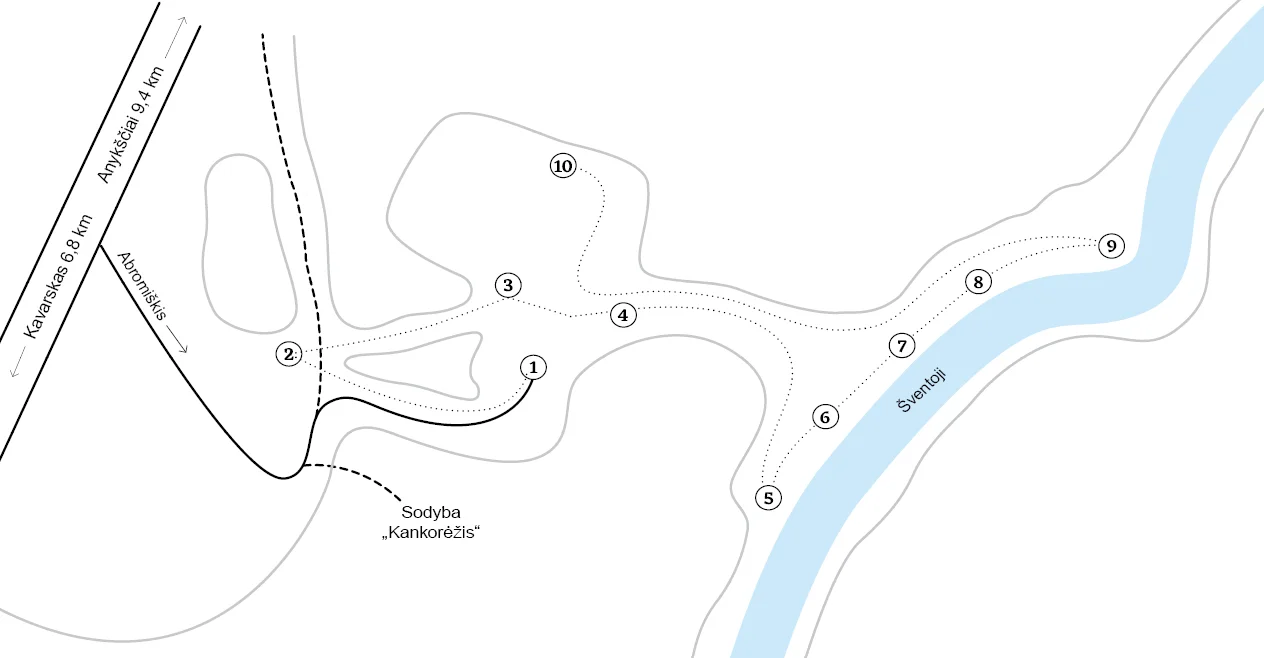
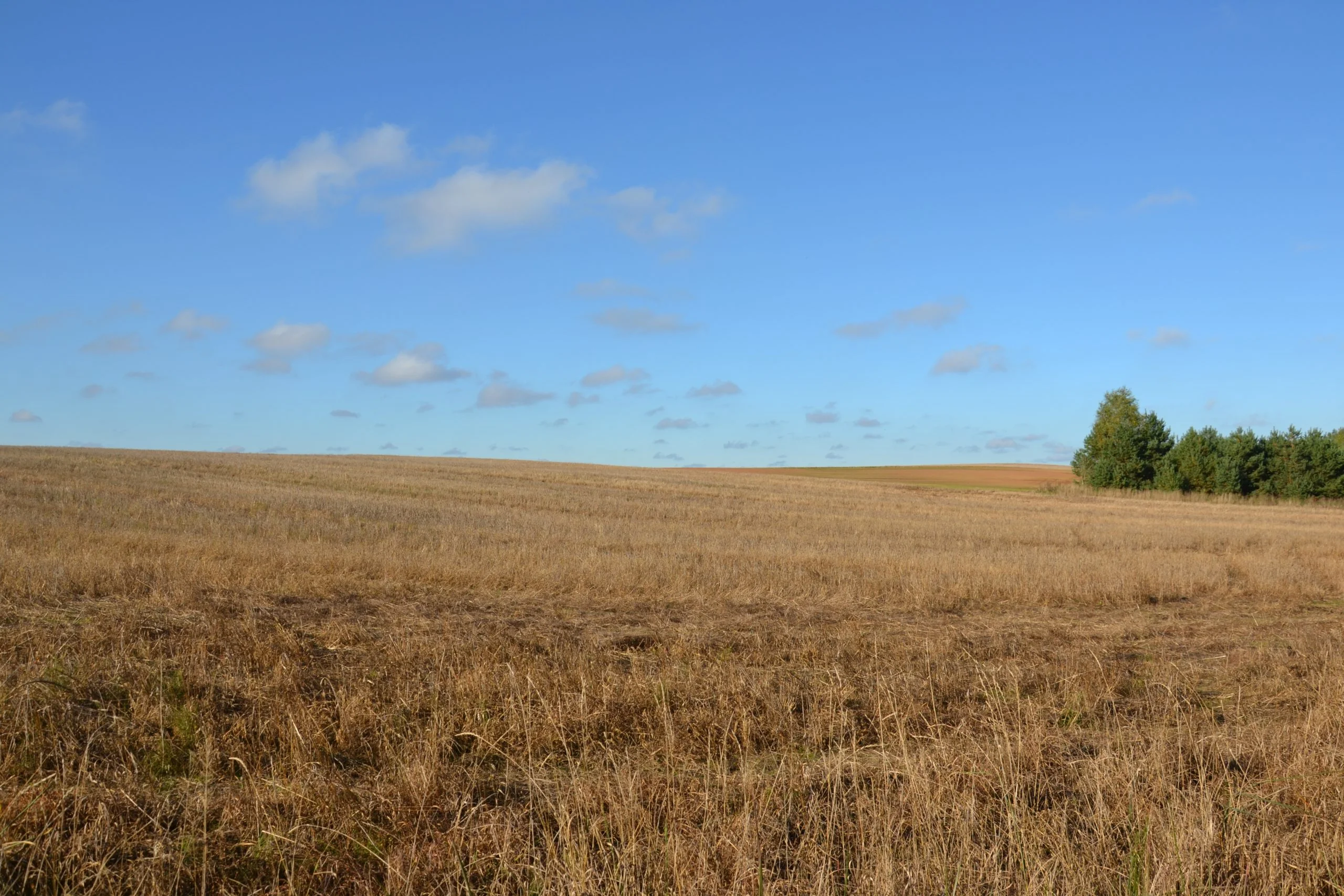
2. Who is this Daikslis?
A journey to an invisible country, a forgotten Lithuania… Where there are now empty fields, hills and forests, several villages were visible even before the war: Pesliai, Abromiškis, Vaivadiškis, Vaišviliškės, Pailgiai, Pienionėliai… The area is famous for its special aura: here, among the forests, the charming bend of the Šventoji River opens up, the remains of the Pesliai mill, cemeteries and something else… Even the sky here, in the valley, seems higher, the space is deeper – so much has happened here! Legend, maybe assumptions: The Viking road from Daugava to the Baltic went through Šventoji, there was a port at the confluence of the river and its tributary Ilgė. The city of Daikslis-Deigslis-Duokslis looms in the stories of old people. Historians, archaeologists, and the prelate St. Kiškis, who came from Abromiškis, tried to search for ancient relics here. A number of stones were discovered, most likely from former foundations (chapel, church?). Literary versions: A. Vienuolis about Ramoškalnis ("Gediminaitė and the peasant"), T. Mikeliūnaitė about the lost city (abs. "Daikslis").
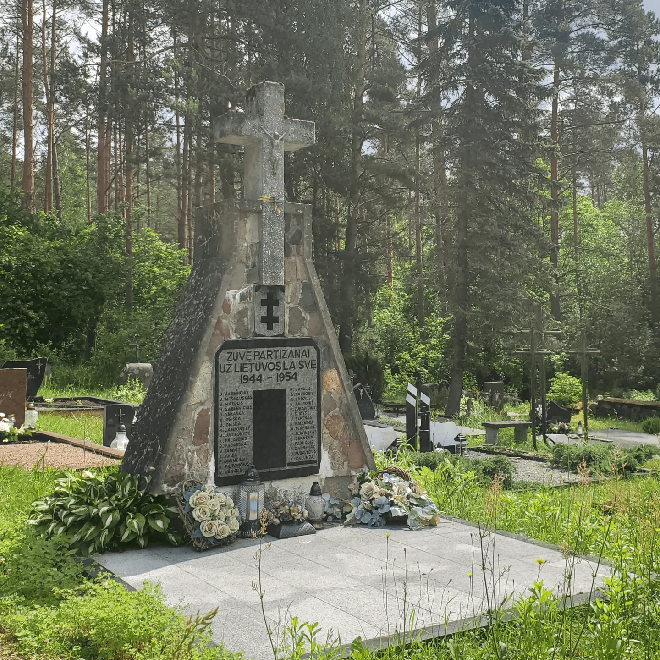
3. Cemetery
Not a single homestead around. Where did the cemetery come from - among the forests? Once upon a time, there was an even older cemetery in Pesliai, only lower, closer to the river. With ornamented wooden crosses, statues of saints. But over time, the sandy shore with the grave mounds was washed away by the Šventoji River: coffins and bones were uncovered. Therefore, the pastor of Anykščiai Church Kondratas Liogė decided to move them to a higher ground. In 1897, he was the first to lie down in the new cemetery, and in 1909 it was officially consecrated (with the permission of the Bishop of Samogitia) by the pastor of Anykščiai Church Juozapas Vembre (this is marked by a special stone column with Latin characters at the gate). In 1924. In 1891, a farmer from the neighboring village of Pasusienis, Vladas Gabrilavičius, and several men enclosed the cemetery with a stone fence, and the cross-maker from Pesliai, Petras Blažys, donated his last cross to the village. In addition to the residents of the area, the Dabužiai landowners Sorokas are buried in the cemetery, and there is also a memorial stone brought from Zaviesiškės (Zavišiškės) to the 1863 rebel Janas Moigis (Jonas Maigis).
4. Pesliai
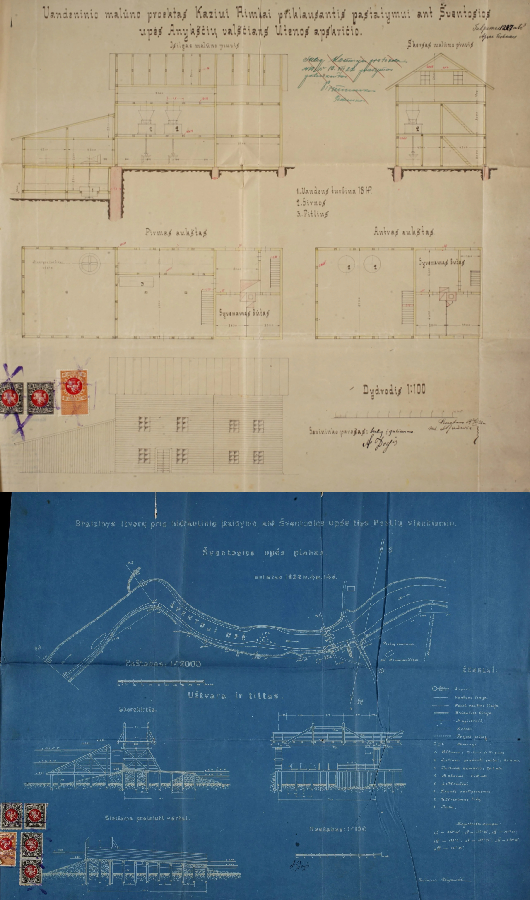
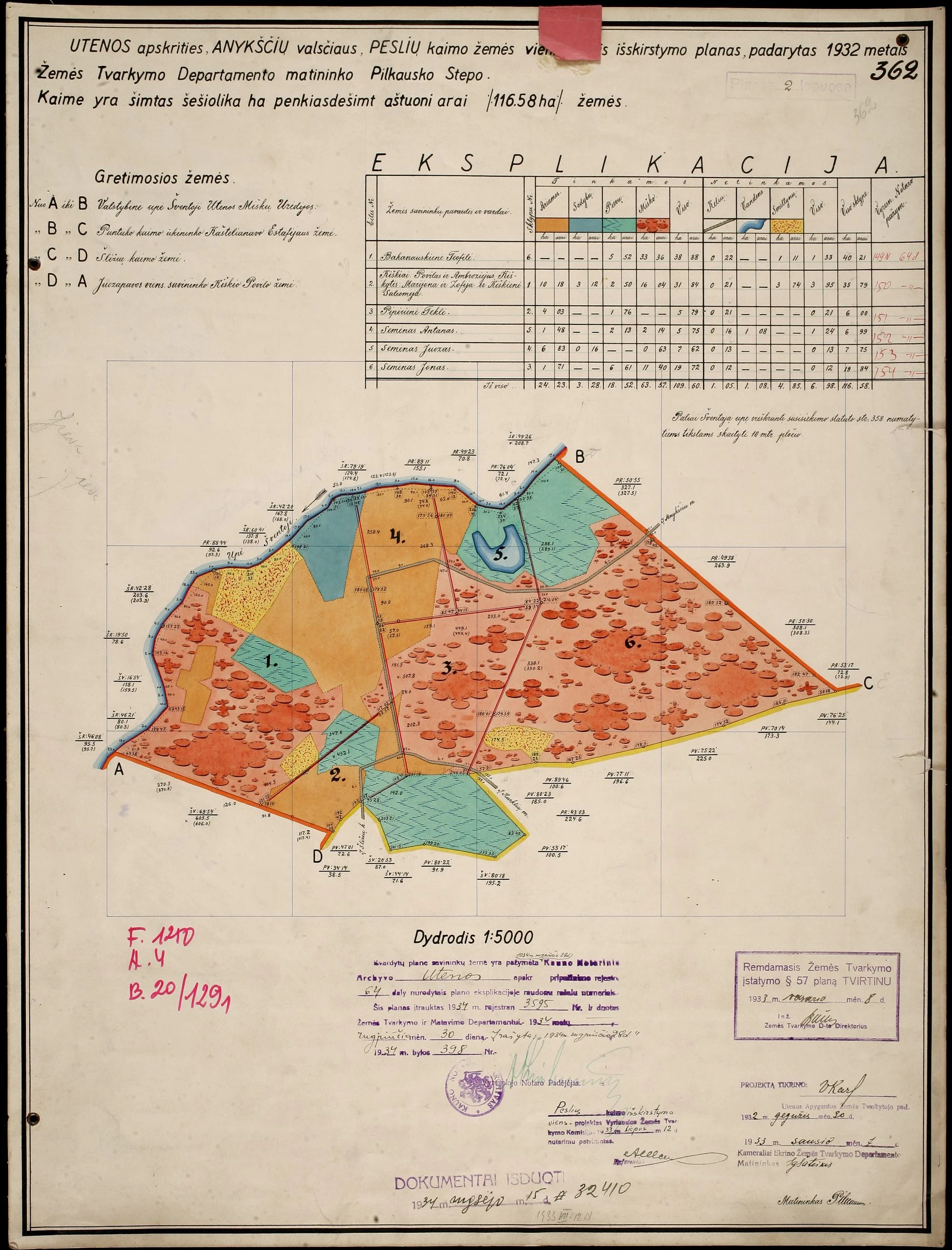
The village was named after the landowner, probably a nobleman, Matas Pesliški (around 1600; Pesliai in Polish – Piesliški). There are also bird pesliški in the area, to this day. Villages with this name were also found in Ukmergė district, Lithuania Minor, on the territory of present-day Belarus. Pesliški stretched along both banks of the Šventoji. There was a tavern on the right bank, and a road to Ukmergė, Kaunas, ran through the heath and the village. In April 1855, the young A. Baranauskas, who traveled to Samogitia, mentioned Pesliški in his diary. During the First World War, the people of Kavarna hid the great bell Adam of their church on the outskirts of Šventoji near Pesliški from the occupiers, and unearthed it after the war ended. In 1924, Kazys Rimkus, who returned from America, whose wife Ona Semėnaitė came from the neighboring village of Vaivadiškės, built a water mill in Pesliai, a footbridge appeared across the river, and later a sawmill and sawmill. In the summer, the soul-workers often spent the night here, making bonfires, waiting for the mill owner to open the dam and let the water down. It happened that the soul-workers were crushed with a pestle by the logs of the fallen souls that had risen up... A new life began, Pesliai became, as it were, the capital of the district.
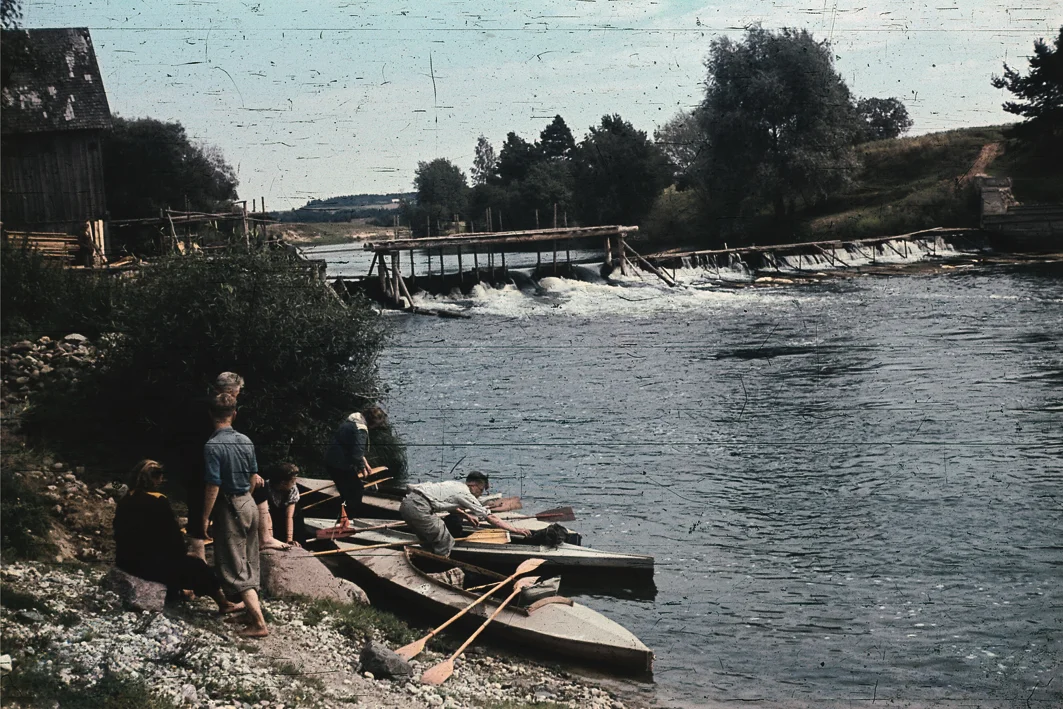
5. The beginning of the mill epic and the miller
On the other bank, you can see the concrete blocks that supported the mill. There are still remains of old piles in the water, and until recently, water was noisily rushing through them, breaking a deep weir. Although K. Rimkus' mill made Pesliai famous, it brought neither wealth nor joy to the owner himself, but rather misfortune. The Gabrėnai tavern operated on the Pesliai road. The younger son Levokas thought of getting rich easily - he "captured" Rimkus' teenage daughter Amiliutė: now half of the mill would be his! However, the proud "father-in-law" did not bring shame; after sending his pregnant daughter to Panevėžys, he sold the mill to Abromas Dubauskas, a Jew from Kavarskas, and moved out himself. Dubauskas did not enjoy the mill for long: he was killed at the beginning of the war. Dr. Petras Janulis became the owner of the mill. The only widely known photo of the Pesliai dam is by hydrologist Steponas Kolupaila. In 1943 (during the German occupation), he organized a canoe expedition: having sailed from Lake Rubikiai to Anykščiai on the Anykšta, he continued downstream on the Šventėja. He stopped in Pesliai – it was necessary to move the canoes over the dam; that moment was captured. The photo, by the way, is in color – St. Kolupaila already in 1937 participated in the Paris Exhibition with color photographs of Lithuanian landscapes and won a gold medal.
6. Pesliačiai. Povilas (Paulius) Šaltenis
On the left bank, much steeper than the right, then almost treeless, lived Šalteniai, Semėnai, Pipirai, Aukštuoliai, Kiškiai. On the right – Simanavičiai, Blažiai, Lunskai, Gabrėnai, Januliai. Later, Peslius was made famous by Povilas (Paulius) Šaltenis. The Šalteniai family came to Peslius from America, but the land was poor, there were many children (5), and 17-year-old Poviliukas returned to Chicago alone. Here he was fascinated by aviation, shocked by the feat of S. Darius and S. Girėnas. Having become a pilot himself, he headed the S. Darius and S. Girėnas club, and with the funds collected and earned by himself, he bought a training plane. In 1938, having brought it as a gift to the Lithuanian Riflemen, he also landed in Anykščiai, and flew over Peslius. And all this was done by a man who was only 26 years old!
7. The Pesliai people. Petras Janulis
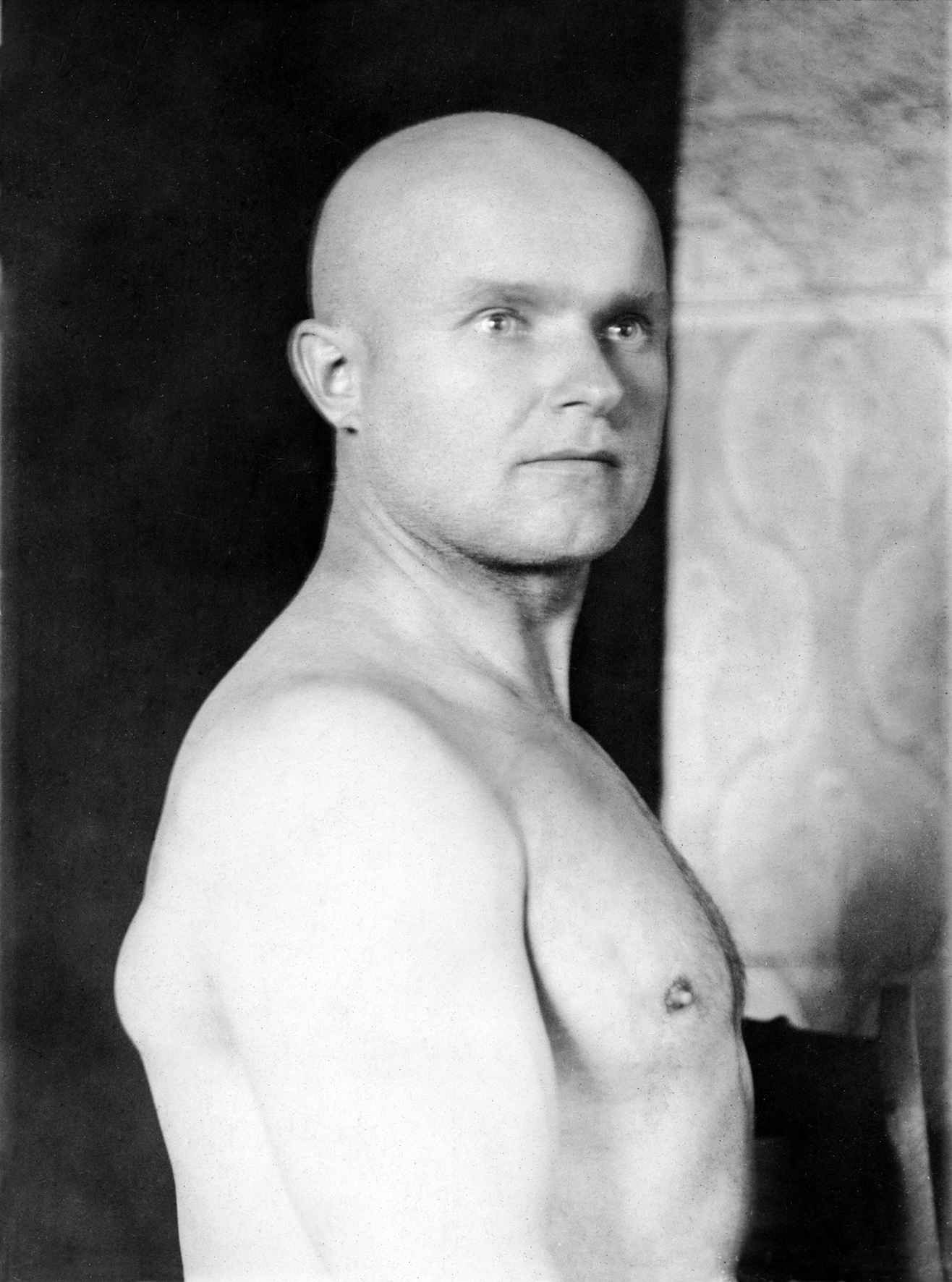
During the war and post-war years, an exceptional person in Pesliai was the aforementioned doctor Petras Janulis. Having left his previous family in Kaunas and moved to Pesliai with a young, beautiful wife, he settled on the very edge of the village. After graduating from Odessa University, he not only treated people from all kinds of diseases, but was also a strange, healthy man. With his arms outstretched to the sides, he would lift a man. Three children were born here one after the other. Unfortunately, his eldest son Algirdas, an officer, was taken by the Soviets to Norilsk in 1940, where he died. The other two sons, students Edvardas and Ričardas, hiding from the occupying army, came to their father in Pesliai – and both stayed here forever…
8. The Terrible Postwar
The mill and the entire right-bank village of Pesliai were burned down by the retreating Germans. One soldier, setting fire to a bundle of straw plucked from the roof, set fire to everything on his way… Only two villages remained untouched – Blažienė (where I was born four years later) and Januliai, because they were border villages, and the Russians quickly forded the river and shot the arsonist… I got my name from my two-and-a-half-year-old sister Rimutė, who drowned in Šventoja. An olive bush blooms near the house. From the house to the river and the cemetery, I see only sand – like in the Curonian Spit. A pine tree, around which giant beetles hum in the evenings. The gaping jaws of the Russian garrison’s wolves. When he goes to bed, my father places an axe by the threshold. If anyone comes – day or night – he puts me to bed, on withered potatoes. His father, a carpenter, used to make coffins for the partisans who had been shot at night in the shed behind the house. They would bury them at night – otherwise the partisans would have found out who the partisans’ relatives were. At the beginning of independence, a monument was erected to them in the cemetery, although not all the records are reliable. For example, A. Tauronis was actually Antanas Turkus from Vilnius, who had changed his surname in his passport, and had fled both from the Germans and the Russians. He wore a German cap, and around his neck – he was God-fearing – a knot with St. Agatha’s bread (for protection) given by his mother. When he was shot, unarmed, the partisans boasted that they had finished off a fascist… The Pesliai gradually dissolved: some died, some were exiled (the partisan liaisons Semėnai), some moved to the cities. Now, on the site of their native home, a pine forest has been planted... For a long time, the murmur of water falling over the dam's piles could be heard from afar...
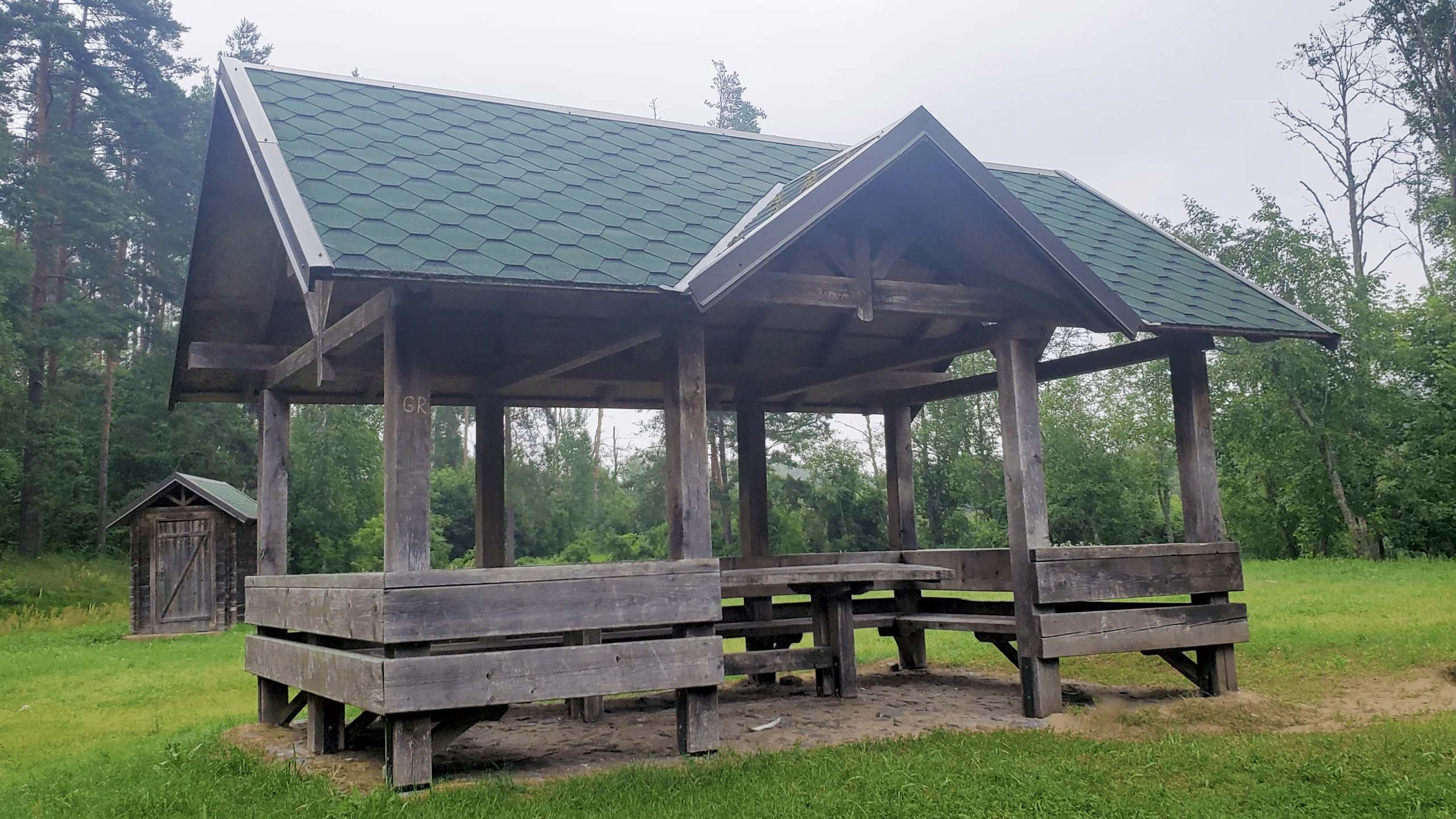
9. Swimming pool
10. The Pesliai people. Petras Blažys
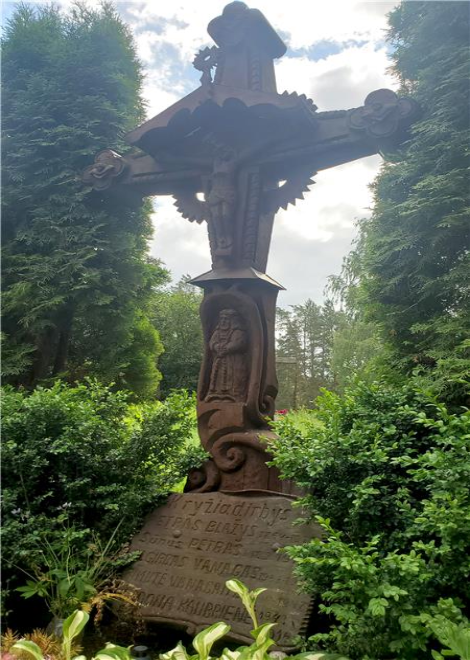
My grandfather Petras Blažys came from the neighboring village of Vaišviliškės, was drafted into the army and returned home without health, only after learning the carpenter's trade. He began to make crosses, kupars, and wooden tools. His father left land to Petras and his other son Jonas; they agreed as follows: Jonas would be a farmer, and he would pay Petras in money for part of the land. Jonas went to Russia, worked in mines, and returned with punctured lungs. He gave the debt to his brother, who took the money to the Ukmergė bank, but... World War I began, and when it ended, he could no longer find the money... Thus Petras was left naked and barefoot in the narrow, sandy village of Pesliai. In return, he became famous in the wider area as the most famous cross-maker of the early 20th century! His name was included in the Lithuanian encyclopedia published in Boston, and some of his works or their photographs ended up in the Lithuanian National History Museum, the National MK Čiurlionis Museum, in the encyclopedic publications "Lithuanian Folk Art", "A Collection of Negatives by Adam Varnas", "Lithuanian Cross-Stitching", etc. I wrote a book about my grandfather's "discovery" called "Life According to Peter".„
HELLO, SAINT!
Hail, Holy One, Full of Grace, We are with you, Torn by the storm, Stung by December! Through tears, blue, Between teeth, sand – Our little life. But how good it is to listen to the water in the morning and evening – How it roars and roars, How it roars and roars, Breaks and washes, Makes the stones speak, In the chest, alms, – Amen!
End of route
You can find more stories about Pesliai and the fates of the Pesliai people in the books of Rimantas P. Vanagas: "Pesliai Academy", "Akivaras", "From the Life of the Vievers", "The Beginning of the Autobiography", "This Land", "Three Times Rain", "War Has Not Forgotten Us", "My Homeland - from Heaven!" and others.
For an individual tour, you can contact RP Vanagas by mobile: +370 647 18248